On this page
Garden centers push lawn fertilizer hardest in spring, when everyone is outside again. For the grasses that cover most northern and transition-zone lawns, tall fescue, Kentucky bluegrass and perennial ryegrass, spring is not the most important time to feed.
Fall is.
Key figures
- 1 pound Nitrogen per 1,000 square feet, Indiana September guidance
- 4 pounds Example: 25-0-5 fertilizer per 1,000 square feet
Why fall feeding works
Cool-season grasses grow most when temperatures are mild. After a hot summer they are depleted, and autumn is when they recover, thicken and push roots. Purdue University’s turf program says fall nitrogen promotes root development, builds energy reserves and extends color in cool-season lawns.
Heavy spring feeding does the opposite of what most people want. It drives fast top growth, which means more mowing, while roots lag behind just before summer stress arrives.
A simple fall schedule
Purdue’s guidance for Indiana lawns, which fits much of the cool-season region:
| Timing | What to do |
|---|---|
| September | Feed once daytime highs are no longer in the 90s. Purdue suggests 1 pound of nitrogen per 1,000 square feet. |
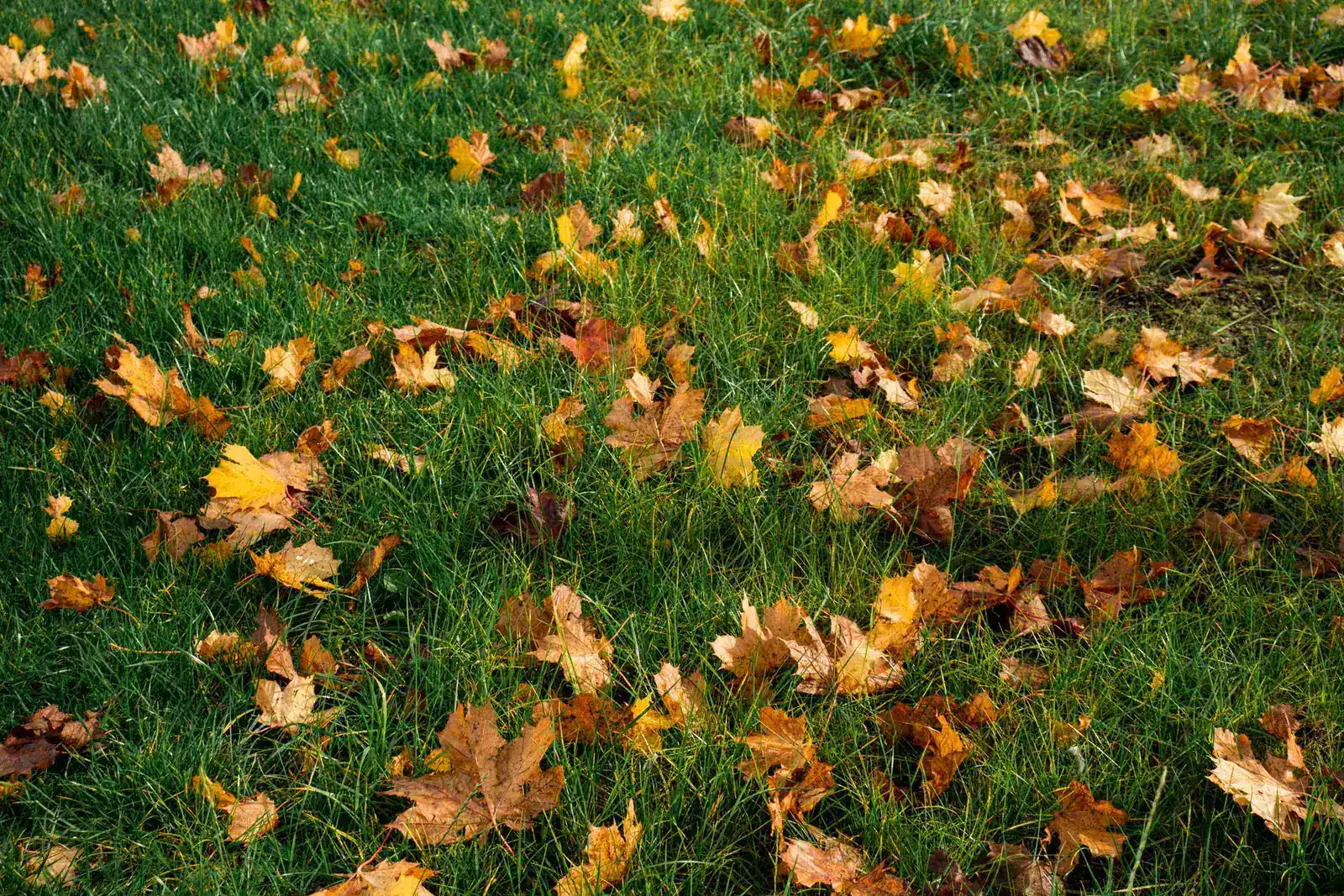
| November | Feed near or after the last mowing, while the grass is still green. Purdue suggests 0.5 to 1 pound per 1,000 square feet. |
Adjust the dates for your region. Farther north, both windows come earlier. Your state extension office publishes local timing.
How to read the bag
The three numbers on a fertilizer bag are the percentages of nitrogen, phosphorus and potassium. To find how much product delivers 1 pound of nitrogen, divide 100 by the first number. A bag labeled 25-0-5 needs 4 pounds of product per 1,000 square feet.
Many lawns do not need phosphorus at all, and some states restrict it on lawns. A soil test tells you whether yours does.
Bermuda, zoysia, St. Augustine and centipede grow in summer. Feeding them in late fall can do harm. Their main feeding window is late spring through summer.
What you will notice
Most of the payoff from late fall feeding appears the following year. Purdue lists earlier spring green-up, a denser lawn, better tolerance of some spring diseases and fewer weeds.
Related reading: Brown Patches in the Lawn: Grubs, Drought or Dog? and How Much to Water a Lawn, and How to Check It.
Questions people ask
What is the best month to fertilize a cool-season lawn?
September is the most important single feeding in most cool-season areas, with a second feeding in late fall while the grass is still green.
Should I use winterizer fertilizer?
Winterizer is a marketing name. What matters is the nitrogen rate and timing, which you can meet with a standard lawn fertilizer.
Can I fertilize and overseed at the same time?
Yes. New seedlings benefit from a starter feed. Follow the bag rate and keep the seedbed moist.
Is it too late to fertilize in November?
Not for cool-season grass that is still green. Purdue recommends a late fall feeding near the last mowing.
Where these figures come from
- Fall Fertilization Purdue University Turfgrass Science · turf.purdue.edu
- Late Fall Fertilization Purdue University Turfgrass Science · turf.purdue.edu
Figures last checked September 2026.