On this page
A stair lift is one of the few pieces of equipment in this field that transforms a house overnight. It is also sold with a great deal of pressure, and the prices quoted for the same staircase vary more than for almost any other home product. These are the questions that make the quotes comparable.
First, is a lift the right answer at all?
The question is not whether the person struggles with stairs. It is whether they can transfer: stand, turn, sit on the seat, fasten the belt, and at the other end stand up again safely, possibly while tired.
If transferring is the difficulty, a lift can make things worse rather than better, and an occupational therapist’s assessment will say so. If the person is unsteady once they arrive upstairs, a lift solves the staircase and leaves the rest of the problem.
Straight or curved
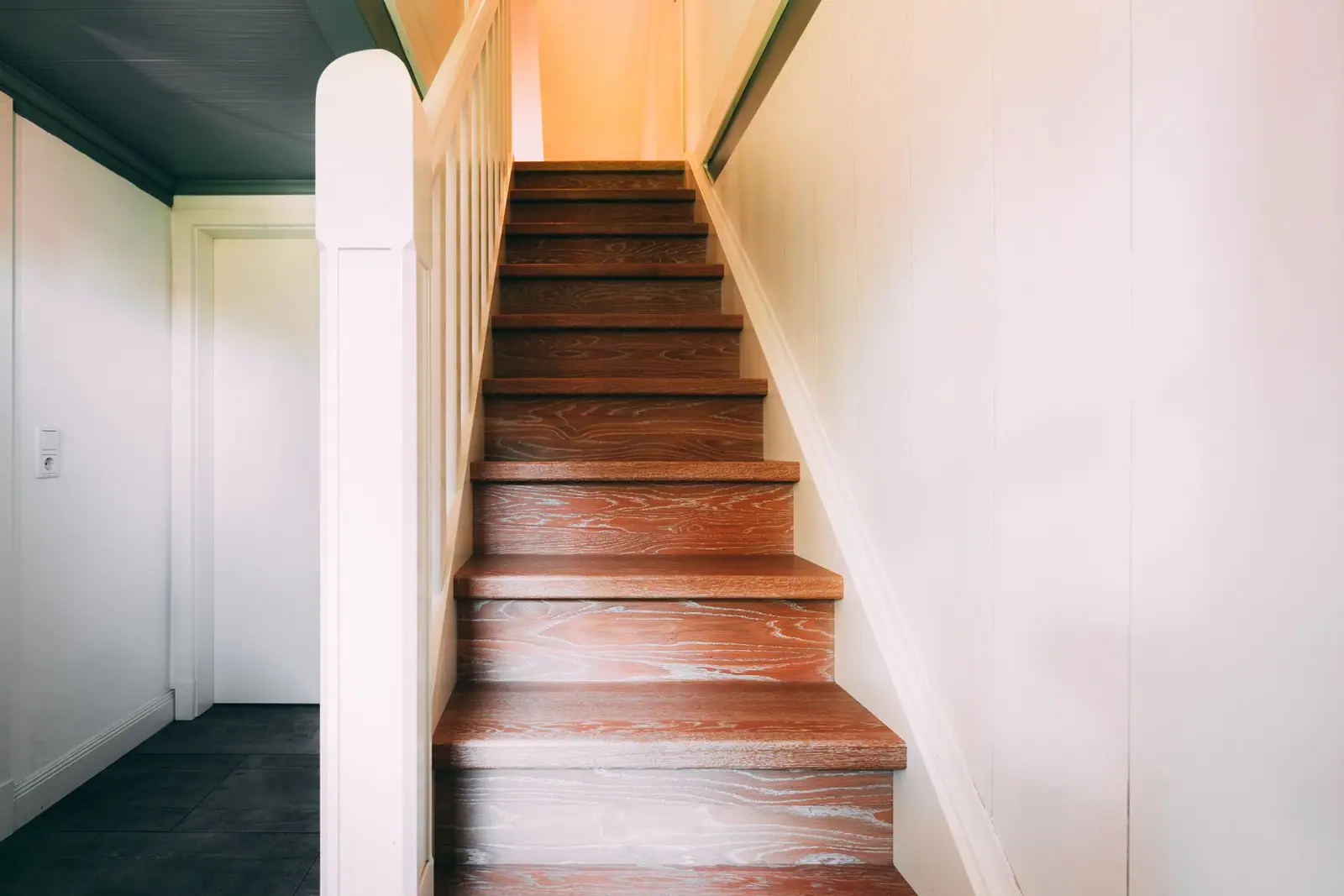
Straight staircases take a standard rail cut to length. Installation is usually a few hours and the cost is the lowest in this field.
Curved staircases, including any with a turn, a landing or a half-landing, need a rail manufactured for that staircase. That is a survey, a fabrication lead time and a much larger price. Reconditioned curved rails rarely fit another house, which is why the second-hand market is mostly straight units.
If a staircase has a single small turn at the bottom, ask whether a straight rail can stop before it, with a small platform or a handrail arrangement at that point. Sometimes it can, and the saving is substantial.
The questions for every quote
- Weight capacity, and whether it suits the person now and in a few years.
- Seat height and depth, and whether the person can rise from it.
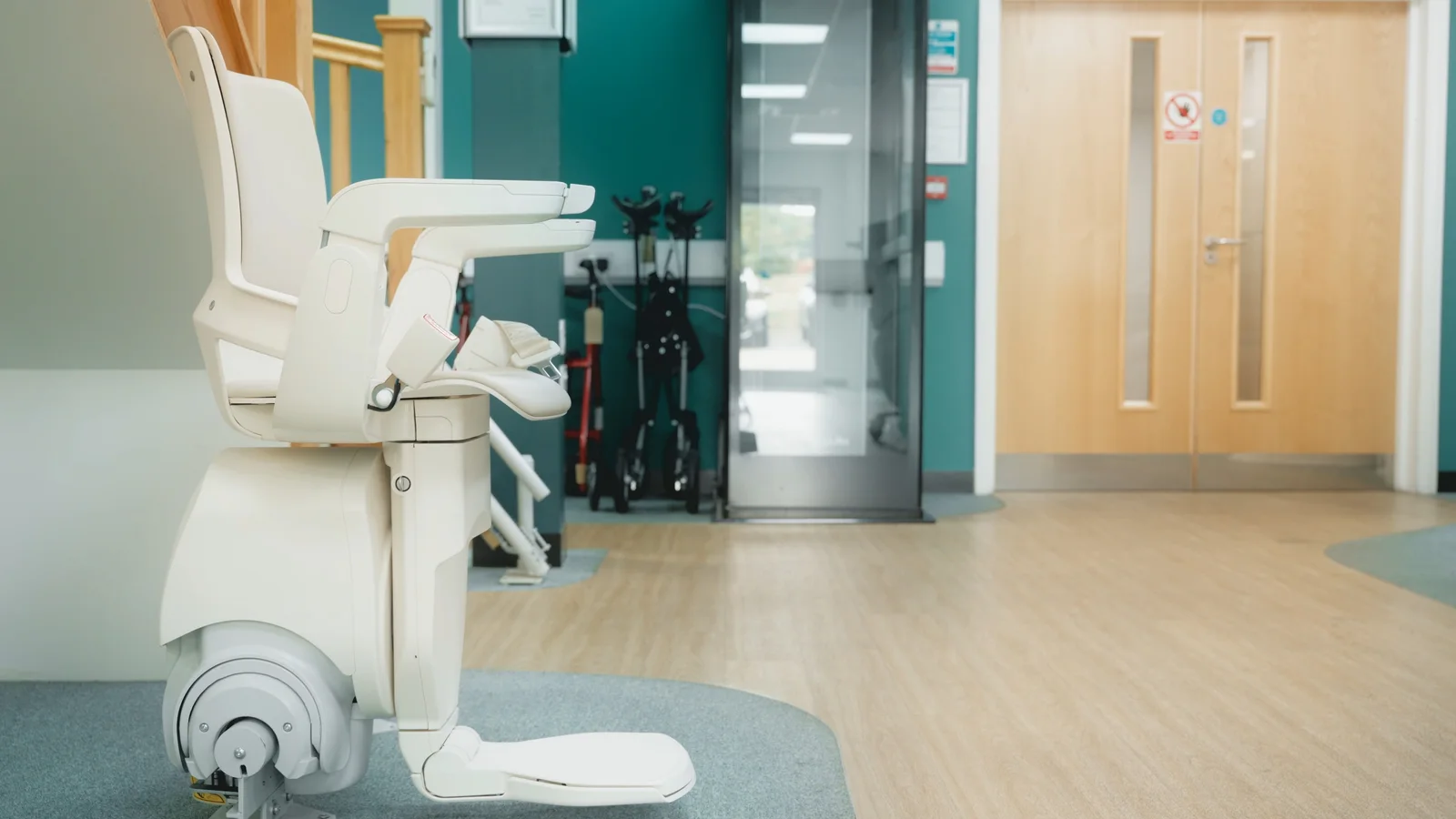
- Swivel seat at the top, which is a safety feature rather than a luxury.
- Controls: are they usable with weak or arthritic hands, and is there a remote at each end so the lift can be called?
- Folding rail or hinged section where the rail would otherwise block a doorway at the bottom.
- Power: battery operation so it works during an outage, and where the charging points are.
- Noise and speed, which matter more than people expect for a person who is anxious.
- Installation: how long, what damage to the stairs, and whether the treads are drilled.
- Warranty and service, including response time for a breakdown and the cost of an annual service.
- Removal: what it costs to take out, and what the stairs look like afterwards.
Rental and reconditioned
Two options that sellers do not always volunteer:
- Rental, which suits a temporary need such as recovery from surgery, and is often available for straight staircases with a monthly fee and an installation charge.
- Reconditioned units, which are common for straight rails and can be substantially cheaper, with a shorter warranty.
Both are worth asking about explicitly, because the standard pitch is a new installation.
Medicare does not pay for stair lifts. Its equipment benefit covers durable medical equipment used by the person, such as walkers and wheelchairs, and a lift attached to a staircase is a modification to the building. Where a lift is funded, it is usually through a Medicaid waiver, a VA grant, a local programme, or the family’s own money, possibly with a medical expense deduction.
Before the installer arrives
- Measure the staircase width and note any doorway at the bottom or top that the rail might block.
- Check the fire route. A lift parked on a narrow staircase must not make escape harder for anybody else in the house.
- Think about other users. Can everybody else still use the stairs comfortably with the lift parked?
- Agree the parking position in advance, at whichever end suits the household.
- Ask about the second handrail. A lift does not remove the need for good handrails, lighting and contrast on the step edges.
After it goes in
- Have everybody practise, including how to call the lift and how to release it manually.
- Keep the charging points switched on, which is the most common cause of a lift stopping.
- Book the annual service and keep the contact number by the phone.
- Revisit the plan yearly. A lift solves the stairs; it does not stop needs changing, and the next conversation is usually about the bathroom.
Related reading: How Long a Ramp Actually Has to Be and Is a Stairlift Service Plan Worth the Annual Cost?.
Questions people ask
Does Medicare pay for a stair lift?
No. Medicare's durable medical equipment benefit covers items the person uses, such as walkers and wheelchairs. A stair lift is attached to the building and falls outside it. Medicaid waivers, VA grants and local programmes are the usual funding routes.
Why are curved stair lifts so much more expensive?
Because the rail has to be manufactured for that specific staircase, after a survey, rather than cut from a standard straight section. That also means reconditioned curved rails rarely fit another house, so second-hand options are mostly straight.
Do stair lifts work during a power cut?
Most run on batteries that charge at the parking point, so they continue working for a number of trips during an outage. Confirm it for the specific model, and keep the charging points switched on.
Can you rent a stair lift?
Often, for straight staircases, which suits a temporary need such as recovery from surgery. Reconditioned units are also common for straight rails. Ask about both explicitly, because the standard quote assumes a new installation.
Where these figures come from
- Durable medical equipment (DME) coverage Medicare.gov · medicare.gov
- Home Improvements and Structural Alterations (HISA) US Department of Veterans Affairs · prosthetics.va.gov
- Preventing Falls at Home: Room by Room National Institute on Aging, NIH · nia.nih.gov
Figures last checked September 2026.