On this page
Of everything in this subject, lighting gives the most back for the least money. It requires no assessment to justify, no permit, and in most cases no electrician. It is also the change that families skip, because it does not feel like doing something.
What the guidance says
The National Institute on Aging’s fall prevention advice repeatedly returns to light: use night lights, keep stairways lit, leave a light on in the bathroom at night or use a night light, and turn on the porch light when returning home after dark.
Underneath that is a simple physiological fact: older eyes need considerably more light to see the same detail, adapt more slowly between bright and dark, and are more affected by glare.
The routes that matter
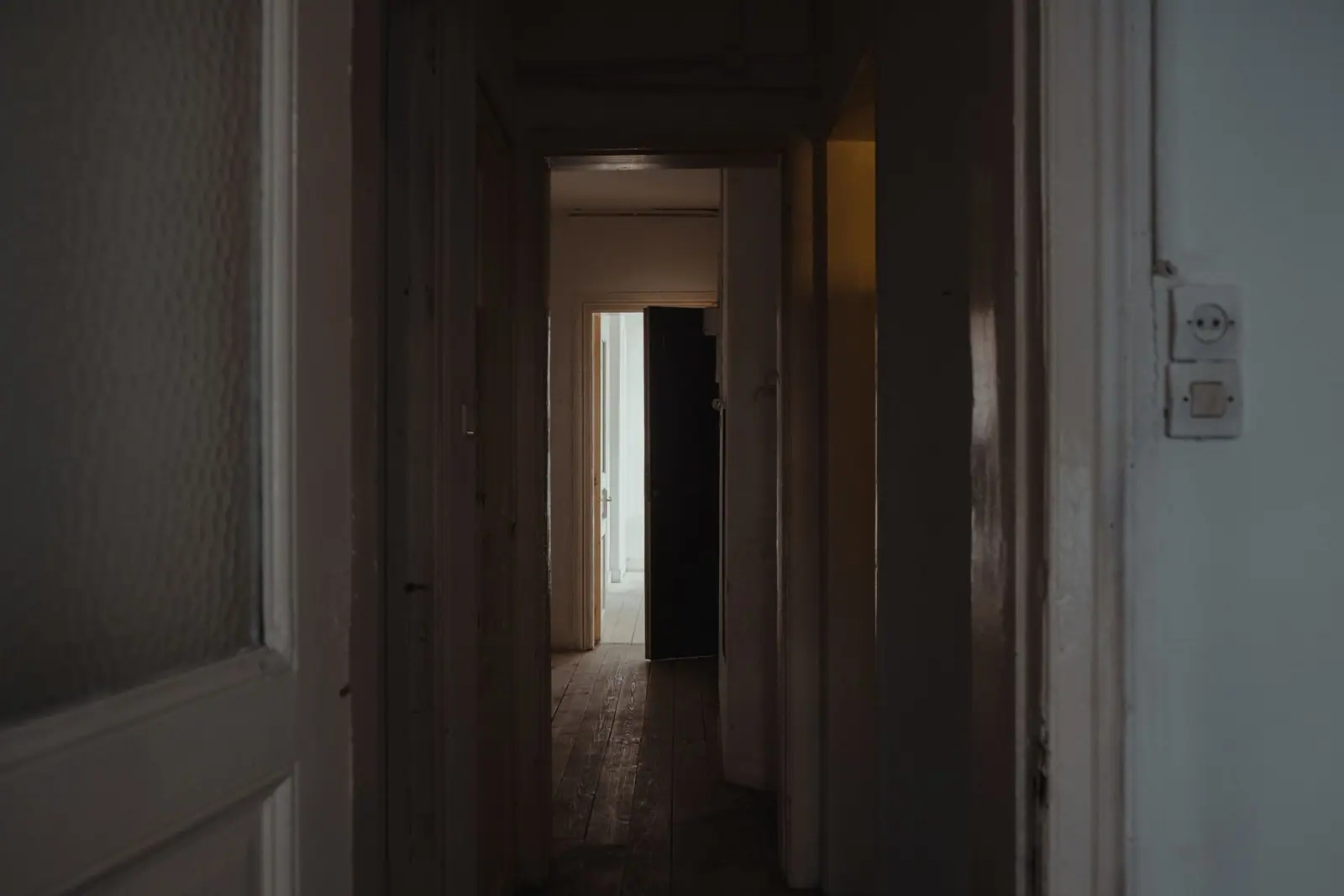
Walk the house at night, in the dark, the way the person does.
Bed to bathroom. The single most important route, and the one where most night falls happen. Night lights along it, or motion-activated lights at low level.
Bed to the top of the stairs. If the stairs are on this route, light them properly and consider a gate if confusion is a factor.
The staircase itself. Light at the top and the bottom, switches at both ends, and enough light to see the edge of each tread.
The front door, inside and out. A porch light on a switch by the bed is a small luxury with real value, and a motion light outside removes fumbling with keys.
The kitchen worktop. Under-cabinet lighting for anybody using knives and hot pans.
Cheap things that work tonight
- Plug-in night lights with a light sensor, in the hallway, bathroom and bedroom.
- Battery motion lights stuck under a bed, along a hallway or inside a closet.
- Touch lamps or clap switches beside the bed for somebody who struggles with small switches.
- Higher output bulbs where the fitting allows it, which is usually a matter of buying a different bulb.
- A torch beside the bed, and another in the kitchen drawer.
- Smart bulbs set to come on at dusk, for households comfortable with an app.
Things worth an electrician
- A second switch at the other end of a hallway or staircase.
- Dimmers, so a room can be bright for tasks and gentle at night.
- Extra ceiling fixtures in rooms that have relied on a single table lamp.
- Outdoor lighting at the path, the steps and the door, with a sensor.
- Moving a switch to a reachable height beside the bed or the door.
These are small jobs individually and worth grouping into one visit.
Watch out for glare, which is the mistake people make when they finally take lighting seriously. A bare bright bulb in a hallway creates a pool of dazzle and deep shadow either side, and somebody with cataracts will see less than before. Use shades, bounce light off the ceiling where you can, and avoid polished floors that reflect straight into the eyes.
Switches, sockets and the small stuff
- Rocker switches instead of small toggles, which are easier with weak hands.
- Illuminated switches, visible in a dark room.
- Sockets raised to a comfortable height during any electrical work, so lamps can be plugged in without kneeling.
- Cord management, because trailing lamp cords are a trip hazard. NIA’s advice on floors is to keep walkways clear.
- A lamp that turns on by itself during an outage, which is worth the small cost in areas with frequent cuts.
The test
After the changes, do the night walk again with the person. They should be able to get from bed to bathroom and back without crossing a dark stretch, without hunting for a switch, and without dazzle at either end. That is the whole specification, and it usually costs less than a single grab bar installation.
Related reading: Bringing the Kitchen and Bedroom Down to Reach and How Long a Ramp Actually Has to Be.
Questions people ask
How much light does an older person need?
Considerably more than a younger adult for the same task, with slower adaptation between bright and dark and greater sensitivity to glare. In practice that means more fixtures, higher output where fittings allow, and shaded or indirect light rather than one bare bulb.
What are the best lights for preventing falls at night?
Night lights along the route from the bed to the bathroom, as the National Institute on Aging advises, plus motion-activated lights at low level so nobody has to find a switch. A torch by the bed covers power cuts.
Should stairs have a switch at both ends?
Yes. Nobody should have to cross a staircase or a hallway in the dark to reach a light. Adding a second switch is a small electrician's job and one of the most useful changes in the house.
Can too much light be a problem?
Yes, when it creates glare. A bare bright bulb produces dazzle and deep shadow, which is worse for somebody with cataracts than moderate even lighting. Use shades, indirect light and avoid highly polished reflective floors.
Where these figures come from
- Preventing Falls at Home: Room by Room National Institute on Aging, NIH · nia.nih.gov
- Six Tips to Help Prevent Falls National Institute on Aging, NIH · nia.nih.gov
- Falls and Falls Prevention National Institute on Aging, NIH · nia.nih.gov
Figures last checked September 2026.