On this page
If your water comes from a public utility, somebody tests it on a schedule set by federal law and sends you a report once a year. If it comes from your own well, nobody does. The US Geological Survey puts it plainly: the quality and safety of water from domestic wells are not regulated by the federal Safe Drinking Water Act, or in most cases by state law, and the homeowner is responsible for maintaining the system and monitoring the water.
That is not a scare. It is a chore, and it is an annual one.
Key figures
- every year EPA routine private-well testing frequency
- 23 percent USGS study wells with a contaminant of health concern
How many people this applies to
USGS estimates that more than 43 million people, about 15 percent of the US population, rely on private wells for drinking water, with over 98 percent of that water coming from groundwater.
And the water is not automatically clean because it is deep. A USGS study that sampled 2,100 private wells found that about 23 percent had at least one contaminant at a level of potential health concern. The most common ones were mostly naturally occurring: radon, arsenic, uranium and manganese, with nitrate the notable human-influenced exception.
- At least one contaminant of concernabout 23%
- No contaminant above a benchmarkabout 77%
US Geological Survey study of 2,100 private wells across the United States. The share is for any contaminant at a level of potential health concern, and the most common were naturally occurring.
The annual test
EPA’s recommendation for a private well is to test every year for:
- Total coliform bacteria
- Nitrate
- Total dissolved solids
- pH
That is the baseline, and it is inexpensive. EPA also suggests testing more frequently where there are small children or elderly adults in the house, or if somebody is pregnant or nursing, and immediately if there are known groundwater problems in your area or you notice a change in odour, colour or taste.
What to add for your own area
The baseline four do not cover geology or land use. Ask your county or state health department what is common locally, and add from this list:
- Arsenic, in regions where it occurs naturally in the aquifer.
- Radon, which is both a water and an indoor air question.
- Uranium and manganese, again geological.
- Nitrate and pesticides, where there is intensive agriculture nearby.
- Fluoride, which occurs naturally in some aquifers at high levels.
- Lead and copper, which usually come from the plumbing rather than the aquifer, so sample first-draw water.
- Volatile organic compounds, near fuel storage, industry or a former petrol station.
- Sulfate and iron bacteria, which are nuisances rather than health risks but explain taste, smell and stains.
Doing the test properly
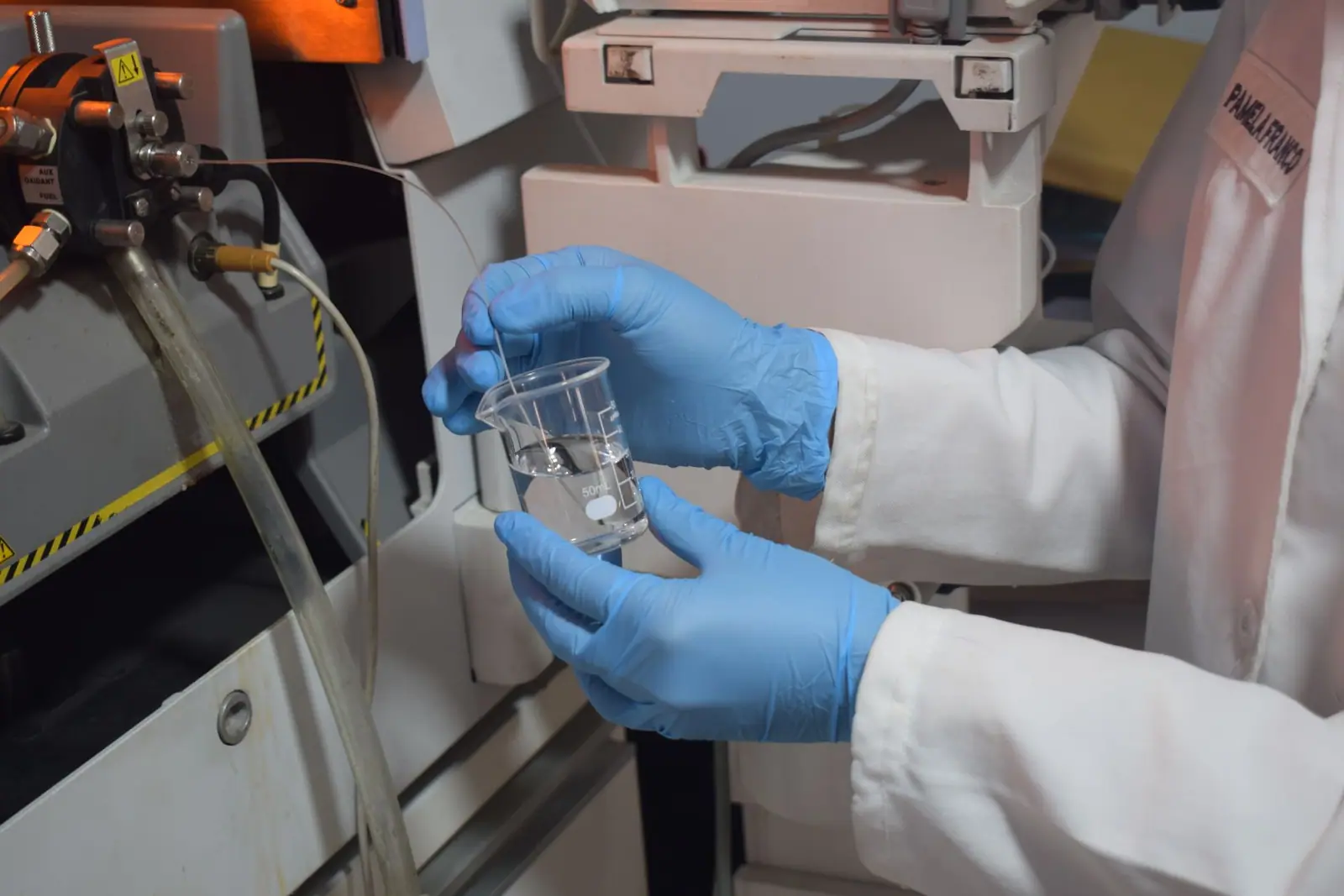
- Use a certified laboratory. Your health department keeps a list, and many run the basic tests themselves for a small fee.
- Use their bottles and their instructions. Bacteria samples in particular are ruined by a dirty tap, a hose, or a delay in delivery.
- Sample the right tap. For bacteria and nitrate, an inside cold tap that bypasses any treatment. For lead, first-draw water after the taps have been unused for several hours.
- Record the date, the tap and the weather. Heavy rain and snowmelt change results, and a wet-season sample is worth having.
- Keep every report. A single reading tells you about one day; a folder of them tells you about your well.
Reading the report
Results are compared with federal limits set for public systems. They do not legally apply to your well, but they are the benchmark to use.
| What you asked for | The benchmark | What it means |
|---|---|---|
| Total coliform | No more than 5 percent of samples positive in public systems | For a household well, any positive means act: find the source and disinfect |
| Nitrate | 10 mg/L as nitrogen | Above this is a particular risk to infants under six months |
| Arsenic | 0.010 mg/L | A long-term risk; treatment choice depends on the form present |
| Uranium | 30 µg/L | Naturally occurring in some aquifers |
| Lead | Action level 0.015 mg/L, dropping to 0.010 mg/L from 1 November 2027 | Usually the plumbing, not the aquifer |
A positive coliform result is common and is not by itself proof that somebody is ill. It means the well is open to surface water somehow: a cracked casing, a loose or missing cap, a flooded wellhead or a sampling error. Retest, look at the wellhead, and treat a positive for E. coli specifically as urgent, because that points at faecal contamination.
When to test outside the annual routine
- After any flooding of the well or the land around it.
- After work on the well or the pump, including a new pressure tank.
- After a change in taste, colour or smell.
- When somebody in the house becomes pregnant, before an infant arrives, or when a baby will be drinking formula made with the water.
- When a new use appears nearby: a large farm, a fuel tank, a quarry, an industrial site, drilling.
- Before buying or selling the property, where a test is normally required anyway.
Related reading: Hard Water, Softeners and the Septic Question and Nitrate Is the Result Not to Wait On.
Questions people ask
Is private well water regulated by the government?
No. USGS notes that the quality and safety of water from domestic wells are not regulated by the federal Safe Drinking Water Act, or in most cases by state law, so the owner is responsible for testing and maintenance.
How often should I test my well water?
EPA recommends testing annually for total coliform bacteria, nitrate, total dissolved solids and pH, with extra tests based on local conditions, and more often if there are infants, elderly adults or a pregnancy in the household.
How common are contaminants in private wells?
A USGS study of 2,100 private wells found about 23 percent had at least one contaminant at a level of potential health concern. The most frequent were naturally occurring: radon, arsenic, uranium and manganese, with nitrate the common human-influenced one.
What do I do if my well tests positive for coliform bacteria?
Treat it as a sign that surface water is reaching the well. Inspect the cap, casing and the ground around the wellhead, retest, and disinfect the well if the result is confirmed. A positive specifically for E. coli is more urgent and warrants advice from your health department before drinking the water.
Where these figures come from
- Protect Your Home's Water US Environmental Protection Agency · epa.gov
- Domestic (Private) Supply Wells US Geological Survey · usgs.gov
- Contamination in U.S. Private Wells US Geological Survey · usgs.gov
- National Primary Drinking Water Regulations US Environmental Protection Agency · epa.gov
Figures last checked September 2026.