On this page
This is the shortest article on this site, because the whole subject is one decision made in about four seconds, usually by someone who is nearly home.
Key figures
- Six inches Moving-water depth that can knock adults down
- Twelve inches Moving-water depth that can carry most cars
- two feet Moving-water depth that can carry SUVs and trucks
The numbers
The National Weather Service’s Turn Around Don’t Drown campaign publishes the thresholds:
- Six inches of fast-moving water can knock an adult over.
- Twelve inches of rushing water can carry away most cars.
- Two feet can carry away SUVs and trucks.
And the consequence, from the CDC: over half of all flood-related drownings occur when a vehicle is driven into flood water.
- An adult on foot6 inches
- Most cars12 inches
- SUVs and trucks2 feet
National Weather Service, Turn Around Don't Drown. Figures are for fast-moving water; standing water of the same depth can still hide a collapsed road.
Why it goes wrong even for careful drivers
You cannot see the road. Moving water scours out the surface underneath. What looks like six inches over tarmac is often six inches over a hole where the tarmac used to be.
Water is heavier than intuition allows. A foot of moving water pushes against the whole side of a vehicle, and buoyancy lifts the tyres off the surface at the same time. Once the car floats, steering and braking are irrelevant.
The water rises while you decide. Flash flooding is fast by definition, and the depth when you entered is not the depth thirty seconds later.
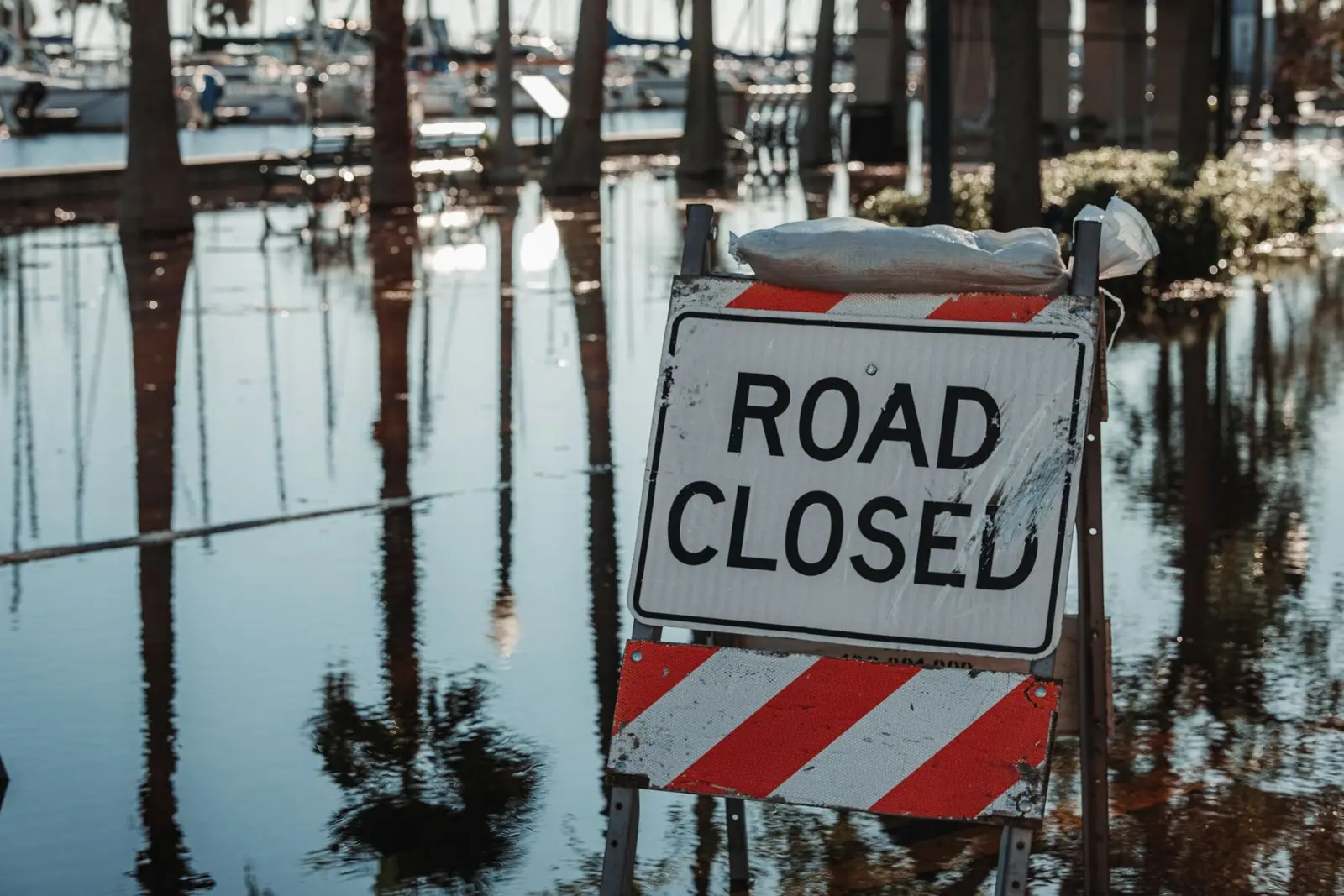
Barricades get driven around, because the road beyond looks fine.
It is never safe to walk or drive into flood water, and never safe to drive around a barrier closing a flooded road. The detour is measured in minutes.
If you are already in it
- If the car stalls and water is rising, get out and get to higher ground. Do not stay with the vehicle.
- If you cannot open the door because of water pressure outside, go out through a window. A window breaker kept in the door pocket, not the boot, is worth having.
- If you are on foot in moving water, use a stick to probe ahead and move sideways to the current rather than against it.
At home
- Never walk through flood water in a basement or garage where anything electrical may be energised.
- Assume flood water is contaminated. Sewage, fuel and chemicals travel with it, which is also why food and water it touched are treated so strictly.
- Move the car to higher ground early, before roads close. A car is easier to replace than a person and harder to replace than a parking space.
Related reading: The Dangerous Part Starts After the Storm and What to Take When You Have Ten Minutes.
Questions people ask
How much water does it take to float a car?
The National Weather Service puts it at about 12 inches of rushing water for most cars, and about two feet for SUVs and trucks.
Is it safe to drive through standing water if it looks shallow?
No. You cannot see whether the road surface underneath is still intact, and depth is difficult to judge from a car.
What should I do if my car stalls in flood water?
Leave the vehicle and move to higher ground if water is rising. Do not wait inside for help.
Why do so many flood deaths involve cars?
Because the risk is invisible and the decision feels routine. The CDC reports that more than half of flood-related drownings involve a vehicle.
Where these figures come from
- Turn Around Don't Drown National Weather Service, NOAA · weather.gov
- Flood Safety: During a Flood National Weather Service, NOAA · weather.gov
Figures last checked September 2026.