On this page
Recovery is an administrative process. Insurance, disaster assistance, replacing identity documents, proving what you owned: all of it runs on paper, and all of it is far harder when the paper is wet, burned or in a house you cannot enter.
The checklist already exists
FEMA and Operation HOPE publish the Emergency Financial First Aid Kit, free, in several formats. It walks through:
- Household identification: identity documents, birth and marriage certificates, passports, immigration records.
- Financial and legal documentation: insurance policies, deeds, leases, vehicle titles, wills, powers of attorney, tax records.
- Financial account information: banks, cards, loans, pensions, and how to reach each.
- Medical information: insurance cards, medication lists, providers.
- Household contacts: employers, schools, doctors, utilities, the out-of-town contact.
It also covers managing money after a disaster and what to expect from the process, which is the part nobody has thought about until they are in it.
An afternoon fills it in. After that it is a yearly check: new policies, changed numbers, new medication, a child who now has a passport.
Photograph the house before anything happens
This is the single highest-value hour in this whole article.
- Walk every room with the phone recording, opening cupboards and drawers as you go, narrating what things are and roughly when you bought them.
- Photograph serial numbers on appliances, computers, tools and anything expensive.
- Photograph the outside, the roof, the garden, outbuildings and vehicles.
- Keep receipts for major purchases in the same place.
- Store it in the cloud, not only on the phone that will be with you in the flood.
Adjusters settle claims from evidence. A video walkthrough dated before the event is the best evidence a household can produce.
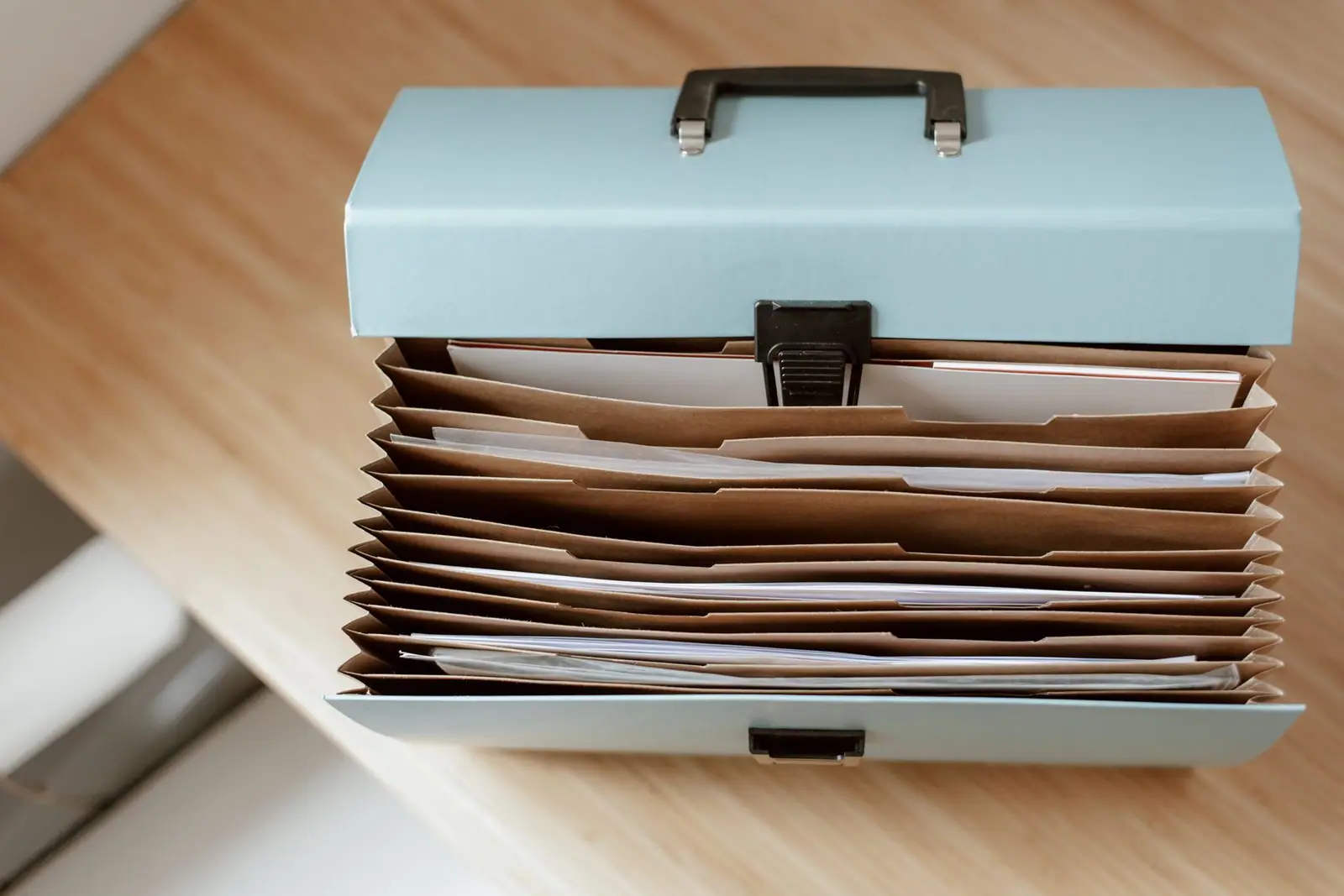
Two copies, two failure modes
- Digital: scanned into encrypted cloud storage, so a house fire does not take them. Use a strong password and two-factor, because this folder is everything an identity thief wants.
- Paper: in a waterproof bag in the go-bag, because internet access in a shelter is not a given and some offices still want paper.
A safe deposit box is a third option with one flaw: you cannot get into it at night during a regional emergency.
What to add for your own household
- Rented? The lease, and contents insurance details. The building is not your claim, everything in it is.
- A business? Registration, licences, employee records, supplier contacts.
- Pets? Vaccination records and a photo of you with the animal, which is what proves ownership at a shelter.
- Caring for someone? Their documents too, including any power of attorney or care plan.
After a disaster
Replacing documents is its own project: identity papers, titles, records. Start early, because every office in the area is doing the same thing for everyone else. FEMA’s disaster assistance process and your insurer will both ask for specific items, and having them ready is what shortens the timeline from months to weeks.
Related reading: Make Sure a Warning Can Actually Reach You and An Emergency Kit You Will Actually Have.
Questions people ask
What documents should I prepare for an emergency?
Identification, insurance policies, deeds or leases, vehicle titles, financial account details, medical records and medication lists, and contacts. FEMA's Emergency Financial First Aid Kit lists them all.
Is it safe to keep documents in the cloud?
With a strong unique password and two-factor authentication, yes, and it survives fire and flood. Keep a paper copy in the go-bag as well.
Why photograph the house?
Because an insurance claim is a proof exercise. A dated video walkthrough showing what you owned settles far faster than a list written from memory.
How often should I update all this?
Once a year, and after any change: a new policy, a new vehicle, a new medication, a new phone number.
Where these figures come from
- Emergency Financial First Aid Kit Ready.gov, FEMA · ready.gov
- Emergency Financial First Aid Kit (EFFAK) toolkit FEMA · fema.gov
Figures last checked September 2026.