On this page
An induction range installation costs more than the appliance when the kitchen needs electrical work, a changed gas connection, delivery, removal or alterations. The best comparison is an installed range that meets the cooking need against another installed option. A cooktop-only price is not equivalent when the household also needs an oven.
Published manufacturer figures give a starting point, but availability and installation scope determine whether that price can become a purchase. This guide distinguishes a dated launch price, a current clearance listing and assumed project arithmetic. None is presented as a national labor rate or a quote for the reader’s home.
Key figures
- $1,599 GE Profile 30-inch cooktop, 2025 launch MSRP
- $1,799 GE Profile 36-inch cooktop, 2025 launch MSRP
- $1,799 GE Profile 30-inch range, 2025 launch MSRP
Published appliance prices have dates and availability limits
| Manufacturer price example | Published amount | What the figure means |
|---|---|---|
| GE Profile 30-inch induction cooktop launch | $1,599 | February 2025 suggested MSRP; appliance only |
| GE Profile 36-inch induction cooktop launch | $1,799 | February 2025 suggested MSRP; appliance only |
| GE Profile 30-inch induction range launch | $1,799 | February 2025 suggested MSRP; includes an oven |
| PHS700AYFS range product listing | $1,199, against $1,799 | October 2026 page’s clearance listing, with stock and manufacture limitations |
Source note: GE Appliances’ February 25, 2025 announcement and PHS700AYFS product page checked October 2026. Launch MSRPs are historical. The clearance page also says temporarily out of stock, out of stock online and no longer manufactured; these figures do not promise a purchasable unit or installation.
- GE Profile 30-inch induction cooktop$1,599
- GE Profile 36-inch induction cooktop$1,799
- GE Profile 30-inch induction range$1,799
Source note: GE Appliances' February 25, 2025 announcement and PHS700AYFS product page checked October 2026. Launch MSRPs are historical. The clearance page also says temporarily out of stock, out of stock online and no longer manufactured; these figures do not promise a purchasable unit or installation.
The clearance discount is $600 from the displayed $1,799 reference price. Before building a project around that difference, obtain availability, delivery and the price for the unit the seller can supply. An unavailable item cannot serve as the low bidder in an installed comparison.
The range page lists exterior dimensions of 30 inches wide, 28.625 inches deep and 37.125 inches high. These describe the product, not all clearances or the delivery route. Fit still depends on the installation instructions and the surrounding kitchen. A headline width cannot settle every cabinet or counter question.
The electrical quote explains the largest scope uncertainty
Changing from a gas range can require a different electrical supply even when the kitchen already has outlets. Replacing an electric range may reuse part of the existing arrangement, but that conclusion depends on its condition and the chosen model. Neither situation automatically establishes that a new main panel is needed.
GE’s launch announcement describes its new cooktops using 208 or 240 volts. That statement concerns those cooktops; it is not a universal range circuit specification. Obtain the model’s installation requirements and an itemized assessment of the existing supply before treating an appliance price as the project total.
Separate a new circuit, any panel work, permits and inspection from basic appliance placement. If panel replacement is proposed, ask for the reason and scope rather than accepting an unexplained package allowance. This allows two installers to be compared on the same work instead of on two different assumptions.
For a worksheet example, assume a $1,799 appliance, $650 of electrical work, $150 of delivery and removal, and $100 of required cookware. The pre-tax sum is $2,699. These allowances are invented inputs for arithmetic, not market prices. If electrical work instead costs an assumed $1,800, the same worksheet becomes $3,849, a $1,150 increase.
Have qualified providers assess the selected appliance, supply, former gas connection, clearances and ventilation. This price comparison gives no wiring or gas-disconnection procedure; follow the manufacturer’s installation and safety instructions.
A range and a cooktop create different kitchen projects
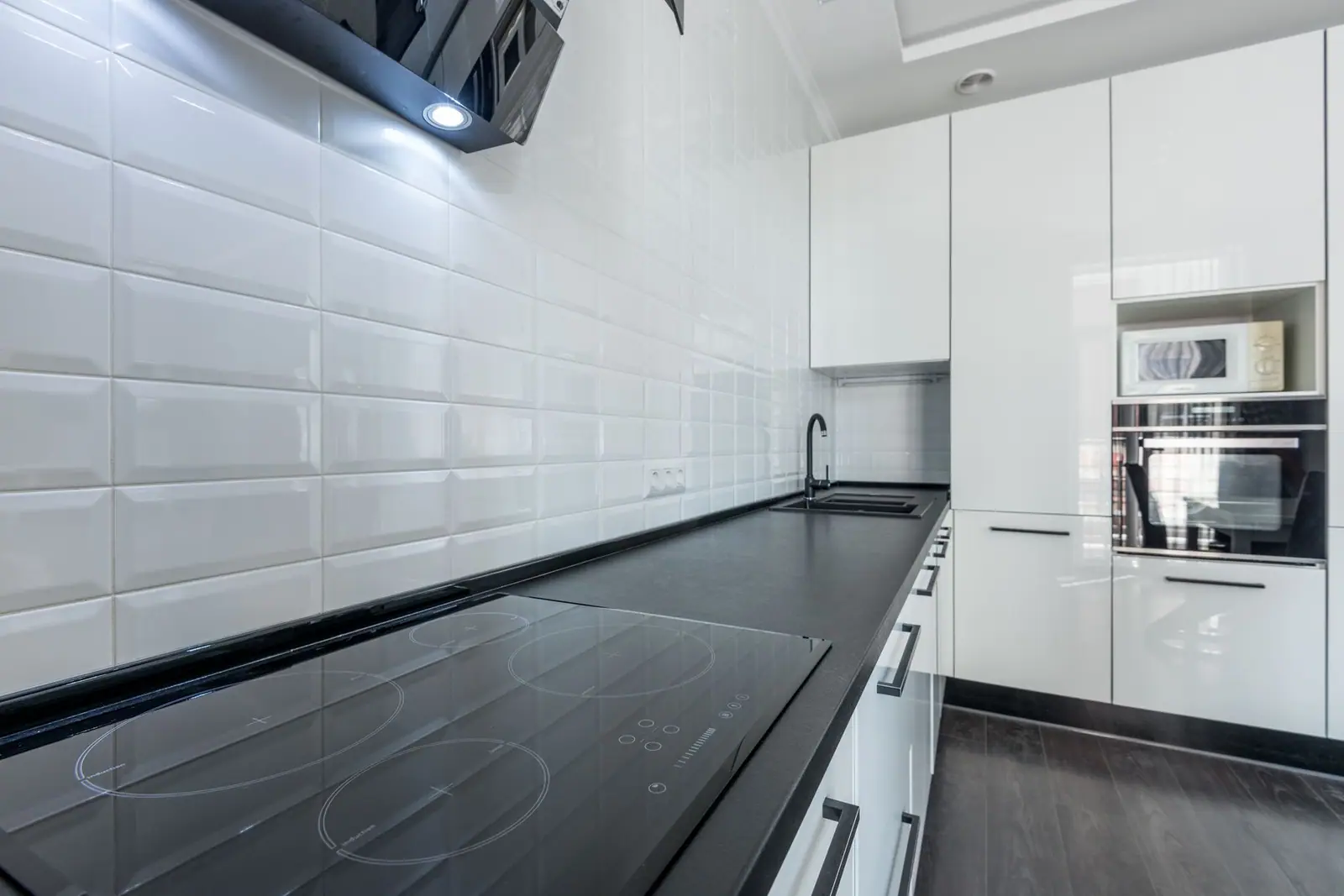
A range combines surface cooking and an oven. A built-in cooktop occupies a countertop cutout and may leave the oven elsewhere. Replacing a range with a cooktop can therefore add cabinetry, a counter and an oven purchase rather than simply substituting the cheaper appliance in the table.
For a like-for-like quote, identify the model, finish, delivered unit and included services. Keep counter alterations, cabinet work and finish repairs visible. Installation that leaves an opening or unfinished surrounding area is a different scope from a kitchen ready for normal use.
Ventilation also remains relevant because cooking produces moisture, grease and particles even without a gas flame. Identify whether the existing hood remains and whether any ventilation work is included. A surface technology change does not price that work or establish the kitchen’s final ventilation arrangement.
If the old range has failed, the appliance repair-or-replace comparison helps distinguish a necessary replacement from an optional technology upgrade. When the alternative would also require delivery and disposal, those shared costs belong in both totals and cancel out of the upgrade premium.
Compatible cookware can prevent an unnecessary extra purchase
DOE describes flat-bottom cookware that attracts a magnet as compatible with induction. ENERGY STAR notes that many existing cast-iron, enameled cast-iron and stainless-steel pieces may work. Stainless steel varies, so check the pan rather than replacing every item based on its name.
Use the selected model’s instructions to check pan sizes, bases and placement. Test the household’s most-used pans first and list only the pieces that need replacement for normal meals. A replacement for one saucepan is a different budget from a premium matching set.
The assumed $100 cookware allowance in the worksheet should become an inventory-based amount. If existing pans work, remove it. If a preferred pan does not, price that replacement and identify whether it is necessary or optional. Accessories should not be hidden inside an installation charge.
Cooking efficiency does not imply a large bill reduction
ENERGY STAR’s approximately 85% heat-transfer figure describes energy reaching the cookware, compared with roughly one-third for gas cooking. It is not an estimate of avoided annual dollars. Gas and electricity have different tariffs, and household bills contain other loads and sometimes fixed charges.
DOE’s 2023 overview describes induction as up to 10% more efficient than conventional smooth-top electric ranges. That phrasing is not a guarantee of 10% less electricity for every cooking routine. Keep the equipment comparison and test conditions separate from the whole household bill.
For scale only, assume a change reduces annual cooking electricity by 50 kWh. At EIA’s July 2026 national residential average of 18.31 cents per kWh, its value is $9.16. An assumed 100 kWh reduction is worth $18.31. The quantities are sensitivity inputs, not measured induction savings.
If the installed upgrade premium were an assumed $500, simple payback at $18.31 annually would take about 27.3 years. This does not make induction a poor choice for cooking preferences; it shows why a small energy benefit cannot carry a large installation premium by itself. The home energy budget keeps this purchase beside higher-consumption heating and water-heating decisions.
Do not subtract an incentive advertised in an old article until the administering program confirms current eligibility and availability. Show the unsubsidized proposal and any approved contribution separately. That makes the comparison usable even if a rebate has different timing from the installation invoice.
Questions people ask
Is $1,199 the guaranteed price of an installed range?
No. It is the PHS700AYFS page's clearance appliance listing, with stock and discontinued-manufacture messages. Confirm a supplyable unit and separately priced installation.
Does changing from gas always require a new panel?
No universal panel requirement follows from choosing induction. The selected model and an assessment of the existing electrical system determine the proposed work.
Does induction cut the electric bill by 85%?
No. The approximately 85% figure concerns heating energy transferred to cookware. Household bill savings depend on consumption, the previous appliance and fuel tariffs.
Will every pan need replacing?
Check the existing pans against the model instructions. DOE describes magnetic flat-bottom cookware; many cast-iron and some stainless-steel pans already meet that basic requirement.
Where these figures come from
- Induction Cooktop and Range Launch Prices, February 2025 GE Appliances · pressroom.geappliances.com
- PHS700AYFS Range: Clearance Listing, Availability and Dimensions GE Appliances · geappliances.com
- Electric Cooking Products EPA ENERGY STAR · energystar.gov
- Making the Switch to Induction Stoves or Cooktops U.S. Department of Energy · energy.gov
- July 2026 Residential Electricity Prices U.S. Energy Information Administration · eia.gov
Figures last checked October 2026.